Gold Prices And Silver Prices: Sharp Swings, Heavy Selling And What Is Really Driving The Market
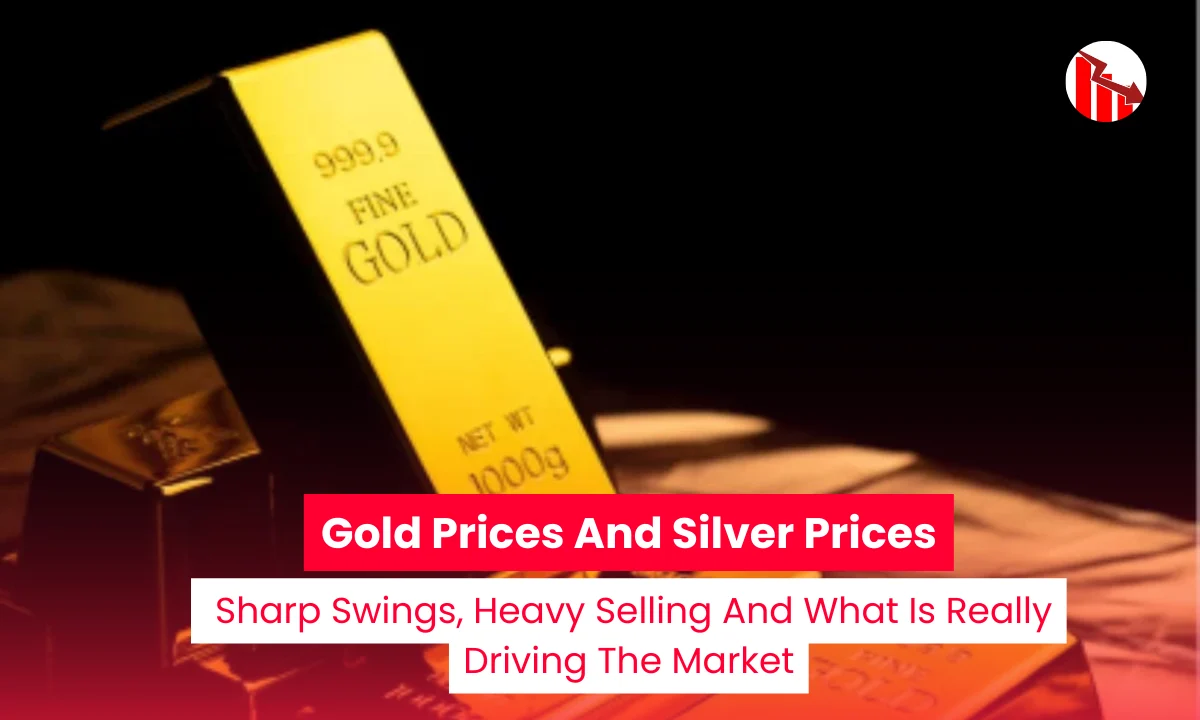
Gold Prices And Silver Prices: Sharp Swings, Heavy Selling And What Is Really Driving The Market
Gold prices and silver prices are once again in focus as bullion markets witnessed sharp volatility across global and Indian exchanges. After a historic rally through 2025, both precious metals entered 2026 with extreme price swings.
Gold moved near record highs before facing sudden corrections, while silver saw even deeper cuts after an explosive rise. Investors tracking gold prices and silver prices are now trying to understand whether the current fall is temporary noise or a sign of deeper consolidation.
The recent price action shows a clear shift in short term sentiment. Profit booking, changing interest rate expectations and global policy signals have increased uncertainty. At the same time, long term demand drivers remain intact.
This has created a confusing market where prices fall sharply even as fundamentals appear strong. Understanding this disconnect is critical for anyone following precious metals right now.
Key Takeaways
- Gold and silver prices remain highly volatile after record rallies in 2025
- Short term selling pressure is driven by profit booking and policy signals
- Gold shows relative stability compared to silver
- Silver remains more sensitive due to its industrial demand exposure
- Public sentiment remains strongly bullish on physical metals
- Long term fundamentals for both metals are still supportive
Also Read: BITCOIN PRICE TODAY: Why Bitcoin Fell Sharply And What Investors Are Watching Next
Current Trend In Gold Prices And Silver Prices
Gold prices are currently hovering in a wide range after touching historic highs earlier this year. International spot gold has been moving around the $4,800 to $5,000 per ounce zone, with sharp intraday swings.
In India, MCX gold prices have seen repeated tests of the Rs 1.50 lakh level per 10 grams, followed by quick recoveries.
Silver prices have shown far more aggressive movement. After peaking above $120 per ounce globally, silver corrected sharply and is now trading near the $70 to $75 per ounce range. On MCX, silver prices dropped significantly in recent sessions, with single day declines crossing 5 to 10 percent at times. This level of volatility highlights silver’s dual role as both a precious metal and an industrial commodity.
Why Gold Prices Are Falling Despite Strong Demand
The recent weakness in gold prices does not reflect a collapse in demand. Instead, it is largely driven by short term factors. One major reason is profit booking after a multi month rally. When prices rise too quickly, traders often exit positions to lock in gains.
Another factor is interest rate expectations. Markets are closely watching signals from central banks, especially the US Federal Reserve. Even small shifts in rate outlooks can cause sharp reactions in gold prices. A stronger US dollar has also added pressure, making gold more expensive for buyers using other currencies.
Geopolitical developments have also played a role. Temporary easing of tensions reduces immediate safe haven demand, leading to short term selling. However, these effects tend to be short lived.
Why Silver Prices Are Under More Pressure Than Gold
Silver prices are facing heavier selling compared to gold due to their unique structure. Unlike gold, silver has a strong industrial use component. Demand from sectors like solar energy, electric vehicles, electronics and data infrastructure plays a major role in price movement.
When global growth expectations fluctuate, silver reacts more sharply. Margin hikes and forced liquidations in futures markets have amplified downside moves. This explains why silver prices have fallen faster than gold prices during recent sessions.
At the same time, physical supply conditions remain tight. Reports of low exchange inventories and logistical constraints continue to surface, even as paper prices decline.
Gold And Silver Price Comparison Snapshot
| Factor | Gold | Silver |
|---|---|---|
| Recent Trend | Mild correction | Sharp correction |
| Volatility Level | Moderate | Very high |
| Safe Haven Demand | Strong | Limited |
| Industrial Demand Impact | Low | Very high |
| Long Term Outlook | Stable bullish | High reward, high risk |
Role Of Central Banks And Global Policy
Central bank activity remains one of the strongest pillars supporting gold prices. Large scale gold purchases by central banks continued through 2025 and remain elevated in early 2026. This reflects a broader move toward diversification away from traditional reserve assets.
Silver does not enjoy the same level of central bank backing, which makes it more vulnerable to short term market stress. However, government policies supporting renewable energy and technology expansion indirectly support silver demand over the long term.
Policy uncertainty, including interest rate decisions and global trade negotiations, continues to inject volatility into both metals.
Public Opinion On Gold Prices And Silver Prices
Public sentiment on social platforms remains strongly supportive of precious metals. Many long term holders view the current decline as temporary and remain focused on physical ownership rather than paper price movements.
A dominant theme among retail participants is frustration over perceived price suppression in futures markets. Many believe physical demand tells a very different story compared to screen prices. Statements expressing refusal to sell during dips are common, especially among silver holders.
There is also strong confidence in industrial demand trends. Discussions often highlight the role of silver in energy transition technologies and advanced manufacturing. Gold continues to be viewed as a hedge against currency instability and long term economic uncertainty.
This gap between price action and sentiment highlights why volatility remains elevated.
Short Term Outlook For Precious Metals
In the near term, gold prices are expected to consolidate within a broad range. Analysts suggest that stability may return once policy clarity improves and speculative positioning cools down. Sudden spikes and drops may continue, but extreme moves could reduce in frequency.
Silver prices may remain choppy for longer. Due to its higher volatility, silver often overshoots in both directions. Traders and observers should expect wider swings compared to gold.
It is important to note that price movement alone does not change the underlying role of these metals in the financial system.
Long Term Perspective On Gold And Silver Prices
From a long term view, both gold and silver continue to benefit from structural trends. Rising debt levels, currency concerns and geopolitical uncertainty keep gold relevant as a store of value.
Silver stands at the intersection of investment demand and industrial growth. Expansion in clean energy, automation and digital infrastructure supports long term consumption. Supply challenges further add to its strategic importance.
While short term corrections can feel intense, they are not unusual after historic rallies.
What This Means For Market Watchers
Understanding gold prices and silver prices requires separating short term noise from long term direction. Volatility does not automatically signal weakness. In many cases, it reflects the market adjusting after rapid gains.
Watching policy signals, currency movement and physical market indicators provides better insight than focusing only on daily price changes.
Tags: gold prices, silver prices, MCX gold, MCX silver, precious metals market, bullion prices, gold silver outlook
Related Posts :




Share This Post