The 5/25 Rule: A Simple Method For Ruthless Focus And Real Progress
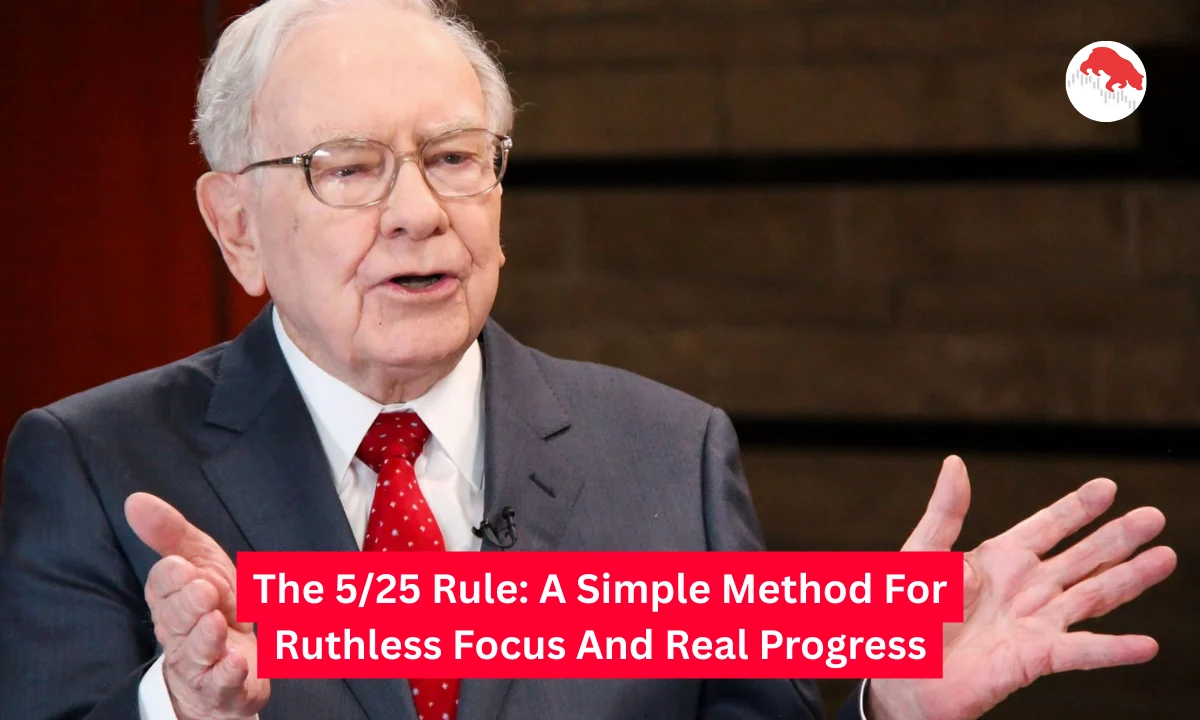
The 5/25 Rule: A Simple Method For Ruthless Focus And Real Progress | Image With CNBC
The 5/25 Rule is often linked with Warren Buffett. It is seen as a powerful goal-setting and focus strategy that helps people reduce distraction and achieve results. The idea behind the rule is simple. You write down your top 25 goals in life or work. Then you choose the 5 that matter most. The remaining 20 are not backup goals. They become a strict Avoid At All Costs list.
This approach has gained new attention again in late 2025 and early 2026. It has become popular on social platforms like X, especially during year-end reviews and New Year goal planning. People admire the rule because it shifts your mindset. Success is not about adding more work. It is about removing everything that pulls your attention away.
Also Read: 10 5 3 Rule Of Investment: A Simple Guide For Realistic Returns
Key Takeaways On 5/25 Rule
- The 5/25 Rule helps remove distraction and sharpen focus
- Only 5 goals deserve daily energy and effort
- The other 20 goals must be avoided completely
- The rule is praised online for its clarity and simplicity
- It is widely used for career planning, investing, and personal growth
What The 5/25 Rule Means
The rule is built on a simple three-step process. First, you list your top 25 goals. These can be personal or professional. Second, you circle the 5 that are most important. These 5 are the real priorities. Third, the remaining 20 goals are treated as distractions. According to the principle, these goals are the most dangerous. They look important enough to tempt you. But they are not important enough to win.
This mindset is described as brutal but effective. People online often repeat this quote linked to the rule: success comes not from what you do, but from what you refuse to do.
Why People Are Talking About It Again
Recent discussions on X show a clear pattern. The rule spikes in popularity during November, December, and early January. This is the period when people reflect on the past year and reset their goals for the next year. Users across investing, entrepreneurship, productivity, and self-development communities are sharing posts, visuals, and quotes about the rule.
One Korean post with over 1,700 likes and 500 reposts describes it as life changing. Users highlight how it removes confusion and creates intensity around what matters. Another popular post says that the real trap is the 20 almost important goals. People admire how direct the message is. Focus is not soft. It is a discipline of elimination.
Where The Rule Comes From
The idea is commonly linked to a story about Warren Buffett and his pilot, Mike Flint. In the story, Buffett asks Flint to write down his top 25 career goals. Flint marks the top 5. Buffett then explains that the remaining 20 must be avoided completely.
Some reports say Buffett later denied ever formalizing this rule. Yet the story continues to spread because the lesson remains powerful. Whether or not Buffett created it, the principle feels useful and practical.
Why The Rule Works
People admire the 5/25 Rule because it prevents divided attention. Many people feel busy but not productive. They try to chase too many interests at once. This leads to slow progress and frustration.
With this rule, effort becomes concentrated. Energy is no longer spread across 25 directions. It supports deeper focus. It reduces decision fatigue. It also helps build momentum because progress becomes visible.
Users online describe it as simple, sharp, and honest. It removes the emotional comfort of staying half-committed to everything.
How To Apply The 5/25 Rule
Here is a simple way to use the rule in real life:
Steps To Apply The 5/25 Rule
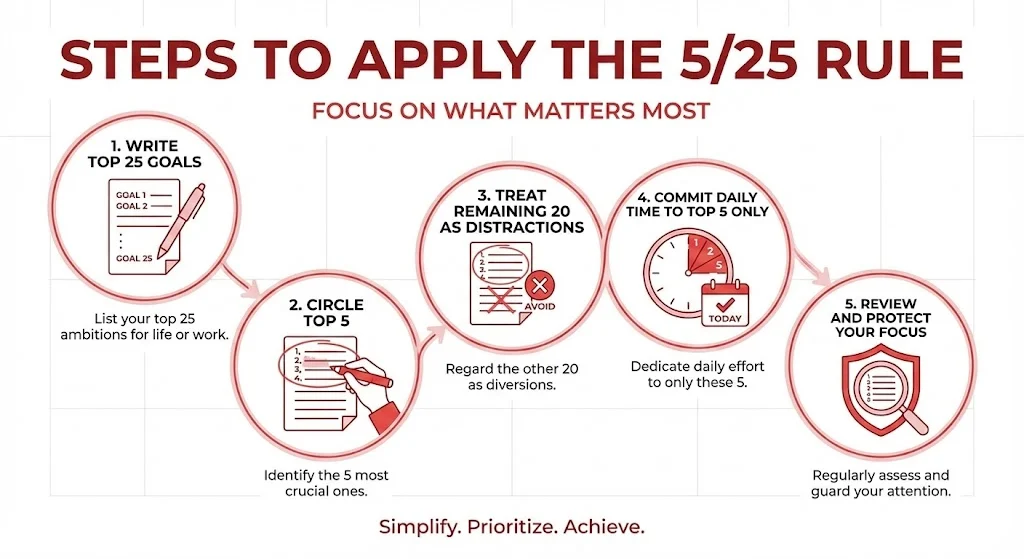
- Write down your top 25 goals in life or work
- Circle the 5 that matter the most
- Treat the remaining 20 as distractions
- Commit daily time to the top 5 only
- Review your list and protect your focus
These 5 goals become your real path. Everything else waits or is removed from daily attention.
Why People Online Love It
Many users on X describe the rule as brutally honest. They respect its clarity. They like the idea that doing less can actually create more success.
Most admired elements include:
Ruthless elimination. The Avoid At All Costs idea is seen as the strongest part of the rule.
Real focus. It shifts mindset from multitasking to deep commitment.
Simplicity. It is easy to understand and remember.
Proof of results. Users say it helps them finally commit.
Quotes such as Focus creates force and Random actions create chaos are commonly shared.
How It Appears In Investing And Work
Investors discuss this rule when talking about portfolio focus. Entrepreneurs apply it to business planning. Students use it for skill building. Professionals use it to reduce distractions at work.
The idea is consistent. Growth comes from focus, not scattered effort.
Public Sentiment In Early 2026
Based on recent discussions, sentiment remains highly positive. Users see it as a mindset upgrade for the new year. Unlike older debates about authenticity, most current conversations focus on results rather than origin. People are applying it, not questioning it.
Related Search Terms And Concepts
The 5/25 Rule is often discussed alongside phrases like priority goals, ruthless focus, avoid at all costs list, and distraction threat. It also appears near concepts like the Pareto Principle, but the two ideas are not the same. The 5/25 Rule stays strongly linked with productivity and goal-setting.
Final Thoughts
The growth of attention around the 5/25 Rule shows a clear shift in mindset. People are no longer impressed by long to-do lists. They want clear direction. They want simple tools that remove noise and sharpen effort. This rule supports that goal with a structure that is both strict and practical.
The message is direct. Real success requires choice. When everything is important, nothing truly moves forward. The 5/25 Rule helps you choose what matters and protect your time from everything else.
Tags: Warren Buffett, productivity tips, goal setting, time management, success habits, focus strategy
Related Posts :






Share This Post